Exploring Zambia and Zimbabwe
15.05.2025
As you leave Lusaka and head south over the miombo woodland, the land rises gently, becoming more mountainous and begins to feel increasingly wild. You usually clear the crest of the escarpment at a fairly low altitude, which makes the sudden reveal of the mighty river all the more startling. It is one of our favorite views anywhere in Africa – jaw-droppingly beautiful, varied, and layered.
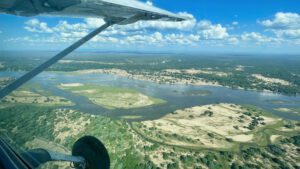
The vast ribbons of water weave over shallow sandbanks and into deep channels, slipping between islands, forests, and reedbeds. The river runs west to east, so there is always a backlit scene as well as a front-lit one, glowing in vivid greens, olives, and tans. You catch tantalizing glimpses of secret side channels—the sort you want to explore by canoe one day.
This year the rains had been kind. After two years of drought, the land and the wildlife had bounced back strongly. The winterthorn trees were in blossom, and the air was heavy with the sweet, heady scent of Faidherbia nectar. The Zambezi felt full, immense, and alive in every sense.
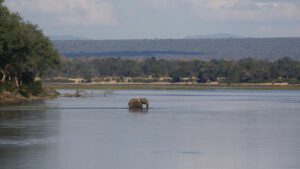
The Lower Zambezi is such a jewel, not least for its range of habitats. We were spoiled with wildlife encounters: an epic wild dog hunt, plenty of lions, elephants feeding just outside our room, and kudu locking eyes with us before melting away into the bush. We even had the dubious pleasure of squeezing past hippos in a canoe on the “discovery” channel.
One particular wild dog hunt will stay with us forever. A pack of twenty-three dogs moved through the landscape like a single organism. On one occasion, the lead dog spotted a lone male impala drinking on an open plain, completely unaware. The moment the lead dog’s posture changed, the rest of the pack noticed. Instantly, they shifted from a playful group into a dark, tightly packed, almost single-file phalanx.
They reduced their profile and stalked. When the impala finally looked up and ran, the dogs exploded into motion at exactly the same moment. One or two pushed hard directly behind the impala, while others ran in parallel on either side. Each time the impala jinked left or right, desperately trying to escape, the flanking dogs would “cut the corner” and take over the lead. It was relentless, precise, and brutally efficient; the impala was caught and killed within minutes.
The alpha female was heavily pregnant, and we hope she dens nearby next month. The pack looked superb—strong, cohesive, and without a radio collar in sight. A truly wild and free tribe.
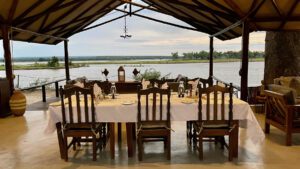
We spent a couple of nights at Lolobezi, the newest offering in the Lower Zambezi. It is glamorous without being overdone, with generous views downriver and a fresh, contemporary feel that still sits comfortably in the landscape.
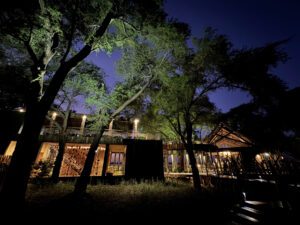
We also stayed at Old Mondoro and Chiawa Camp, two of the original camps in the area. These places are Meccas for the faithful; we know people who have returned dozens of times over their lives. They are iconic not because of jacuzzis or air-conditioning, but because of soul. Old Mondoro was our favorite. It is increasingly rare to find a place that puts you so completely into the wild, where you feel part of the wilderness rather than cocooned from it. As we drifted off to sleep, we could hear hippos walk past our room, and the roar of a lion carried clearly through the wafer-thin walls. We had our best meal of the trip there, too.
We loved our walk through the Natal Mahogany and Winterthorn forest, stepping on damp earth still cool and quiet from the previous night’s rain.
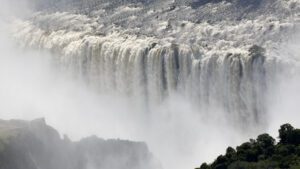
We had never been to the Falls in May. Wow. In a year with such good rain in Angola, there were massive amounts of water thundering over the precipice—way more than Ninian had ever seen. Not only were one’s senses of hearing and sight assaulted by the thundering water and light, but you could also feel it physically thumping your body. The earth shook. What made our day even better was seeing local tourism on the rise with more Zambians and Zimbabweans than ever before visiting the falls for fun. Children screamed with delight as they were enveloped in clouds of heavy spray, emerging soaked and laughing.
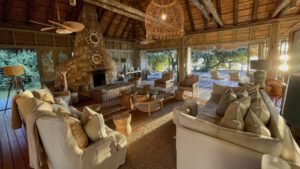
We stayed at Mpala Jena, arriving by boat—roaring up gentle but powerful rapids at about 20 knots, pausing to watch two bull elephants swimming and tussling mid-river. Mpala Jena feels light and airy, with relaxed, beach-like vibes that work beautifully on the banks of the river. The food was good, and the staff were amazing.
At night we slept soothed by the sound of water rushing to the sea. We can’t wait to get back.
See more photo HERE
Archive
Older Articles


